


How the Instagram Algorithm Ranks Posts in 2026
How Instagram ranks feed posts, reels, and stories in 2026 — the five core signals, what changed from 2025, and the tactics that still work.

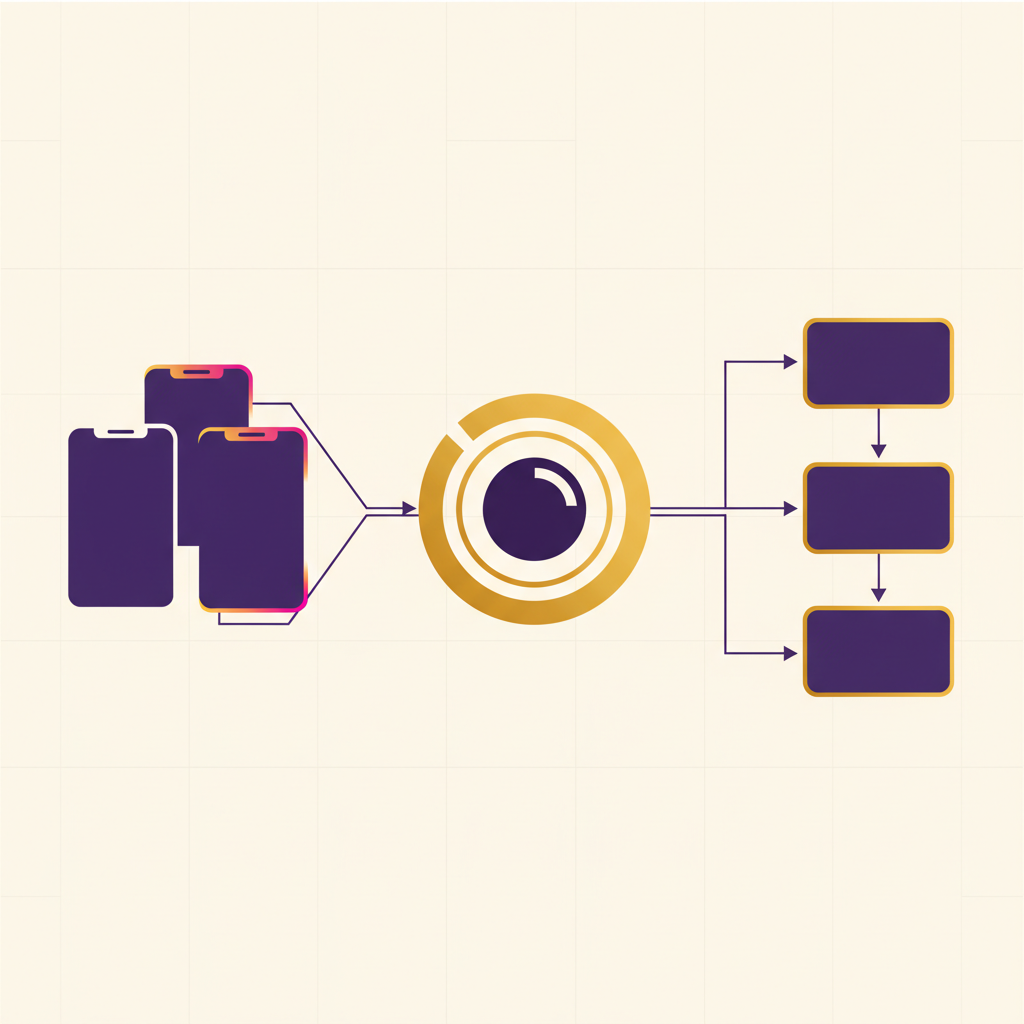
Instagram’s ranking algorithm is not a single algorithm. It is a stack of five different systems — one for the feed, one for reels, one for stories, one for Explore, and one for search — that share signals but weight them differently. In 2026, the weighting has shifted further toward engagement velocity and relationship strength, and away from absolute follower count and recency alone.
This post walks through the mechanics that matter most, what changed from 2025, and how to structure your posting strategy around them.
The five core ranking signals (2026 snapshot)
| Signal | What it measures | Weight (relative) |
|---|---|---|
| Engagement velocity | Likes, comments, saves per minute in opening window | ★★★★★ |
| Relationship strength | How often a viewer has interacted with this creator | ★★★★☆ |
| Content-type match | Whether the viewer typically engages with this format | ★★★★☆ |
| Time-decay | Hours since publication | ★★★☆☆ |
| Session-level feedback | Whether the viewer has already skipped similar posts in this session | ★★★★☆ |
Signal 1: Engagement velocity (the heaviest weight in 2026)
The single most important change from 2025 to 2026: engagement velocity in the first 60-120 minutes now outweighs nearly every other signal for feed ranking. Instagram’s internal model uses this as a real-time proxy for “is this content worth distributing more widely?” The threshold varies by follower tier, but the pattern is consistent:
- Accounts under 10K followers: 8-12% engagement rate in the first 90 minutes = reach boost trigger
- 10K-100K: 4-7% in the first 90 minutes = trigger
- 100K-1M: 2-4% in the first 2 hours = trigger
- 1M+: 1-2% in the first 3 hours = trigger
Miss the opening window and the post enters time-decay territory where it will not recover regardless of quality. This is why posting when 70% of your followers are online matters as much as what you post.
Signal 2: Relationship strength
The algorithm keeps a running score for every follower-creator pair. Actions that strengthen the score, ranked by weight:
- Direct message interaction (two-way)
- Comment (leaving or replying to)
- Save
- Profile visit
- Like
- Story view
Likes are at the bottom of the depth-signal list. Comments and saves weight roughly 3× as heavily. This is why engagement-mix ordering (some likes, some comments, some profile visits) consistently outperforms pure-likes ordering for serious growth campaigns.
If you are testing the engagement-mix strategy, the comments packages and profile visits map directly to signals 2-4 above.
Signal 3: Content-type match
Instagram now classifies each viewer by their content-type preference based on a rolling 30-day window. If a viewer mostly engages with reels, your carousel posts will under-rank in their feed even if the engagement-velocity signal is strong. The algorithm is biased toward showing viewers the format they reliably engage with.
Practical implication: diversifying your content-type mix (reels, carousels, single images, stories) lets different segments of your audience engage with the format they prefer, which keeps your account’s reach baseline higher across the viewer base.
Signal 4: Time-decay
Once a post is 24 hours old, its feed reach collapses toward zero. Explore and hashtag reach can persist longer (days to weeks for evergreen content), but feed impressions are front-loaded hard. The time-decay curve in 2026 is steeper than it was in 2024.
Signal 5: Session-level feedback
If a viewer opens Instagram, scrolls past three posts in your niche without engaging, and then sees your post fourth, your post is down-ranked specifically for that session. The algorithm does not show the viewer five similar posts in a row. This is the main reason posting into a niche-saturated time window (e.g., fitness content Monday morning when every fitness account posts Monday morning) hurts individual-post reach.
What changed from 2025 to 2026
- Engagement velocity weight increased 20-25% based on inferred ranking shifts. The first-90-minutes window is now the single dominant signal.
- Follower-count signal decreased — raw follower numbers matter less than engagement ratio in 2026. A 5K-follower account with 8% engagement consistently outreaches a 50K-follower account with 1% engagement on comparable content.
- Relationship strength weight increased for close-friends-type signals (DMs, replies, saves). Private engagement signals outweigh public ones for ranking.
- Content-type classification is now real-time — viewer classifications update within the session, not weekly.
- AI-content detection was added to the ranking stack. Posts flagged as AI-generated (detected via metadata and visual analysis) now carry a down-rank weight in feeds where the viewer has not explicitly opted into AI content.
Reels ranking vs feed ranking
Reels use a substantially different stack. The dominant signals for reels:
- Watch time percentage (did the viewer watch 70%+ of the reel?)
- Completion rate (watched to the end?)
- Rewatches (highest signal — rare and treated as strong preference)
- Share-to-DM ratio (2026 addition — shares to DMs specifically, not shares to Stories)
- Engagement velocity (same logic as feed but measured in seconds not minutes)
Reels reach compounds more aggressively than feed posts because they are distributed through the Reels tab which has a cold-start discovery model. A reel that hits the completion-rate threshold in the first hour can reach 10-50x the creator’s follower count within 48 hours.
Stories and Explore
Stories ranking is primarily driven by relationship strength and a recency-decay that is much steeper than feed (hours, not days). The algorithm is trying to show viewers stories from the ~20 accounts they interact with most.
Explore is a cold-start discovery algorithm. It works off a seed of “posts similar to ones you engaged with this month” and expands outward. The main signal for Explore inclusion is high engagement velocity plus content-type match with the viewer’s recent behaviour — the strictest filter on the platform.
How bought engagement interacts with the 2026 algorithm
The signal pathways are identical whether engagement is organic or purchased, with one caveat: the quality of the source matters because Instagram’s spam-detection model runs in parallel to the ranking model. Real-account engagement delivered at organic pace is treated by the ranking model identically to spontaneous organic engagement. Bot-pool engagement is detected by the spam model and triggers a cascade of negative signals that cancel any ranking benefit.
If you are testing engagement to boost a specific post’s velocity, time the order to land in the first 30-60 minutes. Our Buy Instagram Likes hub explains the delivery pacing we use specifically for opening-window boosts.
Tactical checklist for 2026
- Post when 70%+ of your audience is online (Insights → Audience)
- Front-load the first 90 minutes with any planned engagement pushes (replying to early comments, pinning strong comments, sharing the post to Stories)
- Diversify content-type weekly (3 reels + 2 carousels + 1 single image per week is the general pattern that survives content-type classification)
- Reply to every comment in the first hour
- Use Saves as a KPI alongside likes — Saves weight 3× heavier for ranking
- Run a monthly engagement rate check with the engagement rate calculator to catch ratio erosion early
- Never buy bot-pool engagement. Ever. It triggers the spam model and costs more in lost reach than it saves in dollars.
Bottom line
The 2026 Instagram algorithm rewards the same behaviours that worked in 2023 and 2024, but with amplified weights on engagement velocity and relationship strength. Absolute follower count matters less; what happens in the first 90 minutes after you publish matters more.
Creators who consistently engage back with their audience, post at audience-active times, and maintain a clean engagement ratio outperform creators with larger but less-active followings. That was always true — in 2026 it is simply more pronounced.
Last updated April 2026 — based on observed ranking patterns, inferred from Instagram documentation and third-party signal analysis. Socialfy24, Dubai since 2019.

Stop reading.
Start growing.
Apply what you just read. Pick a service, drop your link, watch it deliver.
Browse all services